
The job ends.
The weight doesn't.
Until now.
Discover the simple recovery framework that helps operators stop carrying the day home - so the shift ends when the shift ends, and the version of you that walks through the door is the one your family is waiting for.
Trusted by law enforcement
Built for high-pressure environments
Refined inside 24 years of operational service
The Reality You're Living
It's not a lack of training.
It's what happens after.
You were trained to handle the worst. No one trained you to recover from it. These are the challenges operators face every single day.
The Drive Home That Never Ends
You leave the shift, but your head is still at work - replaying the call, the conversation, the moment, three...
You leave the shift, but your head is still at work - replaying the call, the conversation, the moment, three days later.
It leaves you frustrated with yourself, wondering why you can't just let it go like other people seem to.
The day keeps following you home, and the version of you that walks through the door is not the version your family is waiting for.
Reactions Ahead of Thinking
You snap at your spouse, your kid, your team - sharper than you meant to, faster than you could stop.
You snap at your spouse, your kid, your team - sharper than you meant to, faster than you could stop.
You feel the gap between who you want to be and who you are in those moments, and it eats at you.
Trust gets quietly chipped away, one reaction at a time, until the people closest to you start working around your moods.
Physically Home, Mentally Still On
You're at the dinner table, on the couch, at your kid's game - but your mind is still scanning the day.
You're at the dinner table, on the couch, at your kid's game - but your mind is still scanning the day.
You feel guilty for not being present, and trying harder doesn't seem to help.
You're missing the moments you came home for, and they are not coming back.
Sleep That Won't Settle
You're tired, but you can't shut it off - 0200 wake-ups, light sleep, the day still running in the background.
You're tired, but you can't shut it off - 0200 wake-ups, light sleep, the day still running in the background.
You feel like you have less to give every day because the rest is not actually rest.
Fatigue compounds, focus drops, decisions get harder, and the cost shows up everywhere else.
Patience That Used To Be There
Your fuse is shorter than it used to be, and small things hit harder than they should.
Your fuse is shorter than it used to be, and small things hit harder than they should.
You know this isn't who you are, but you can't seem to pull the steady version of yourself back into the room.
The patience your family needs from you is the patience the job has already used up.
Tools That Collapse Under Pressure
You tried the apps, the books, the breathing exercises - and they worked in the calm moments and fell...
You tried the apps, the books, the breathing exercises - and they worked in the calm moments and fell apart when it mattered.
You started to wonder if something was wrong with you, since nothing seemed to hold up.
You stopped trying, and quietly resigned to the idea that this is just how it is now.
The Gap Between How You're Seen And How You Feel
Everyone counts on you to be steady, dependable, the one who handles things.
Everyone counts on you to be steady, dependable, the one who handles things.
You carry the quiet weight of feeling overloaded and not present, while being seen as the person who has it together.
You have nowhere to put it down, because admitting it feels like proving the job has won.
Carrying It Forward Into The Next Generation
You watch your kids absorb your moods, your silences, your short answers.
You watch your kids absorb your moods, your silences, your short answers.
You don't want to hand them what you were handed, but you don't have a way to break the pattern.
The carry stops being just yours and starts becoming theirs, and that is the cost you cannot accept.
Why Traditional Resilience Training Falls Short
The tools were wrong.
Field conditions were never in the design.
Most stress and resilience training was built for calm lives. Retreats, meditation apps, hour-long breathing sequences - designed for quiet rooms, sold to people living under load. They collapse the second real pressure hits, and operators walk away thinking nothing works for someone like them.
That conclusion is wrong. The tools were wrong.
🔴 TRADITIONAL APPROACHES
Meditation apps
Designed for quiet rooms, not the cab of a truck
Self-help books
Written for calm lives, not operational ones
Breathing exercises
Hour-long sequences that collapse under load
Generic mindfulness
Weekend retreats and journaling prompts
"Work in calm moments. Collapse under pressure."
VS
🟢 TMR FRAMEWORK
Built in the environment
Created inside 24 years of operational service
Tested under real pressure
Not simulated - refined in the field
Designed for real life
The truck, the door, and everything in between
Adopted by departments
Already being invested in by law enforcement
"Built for the truck, the door, and everything in between."
The Tactical Mindfulness & Resilience Framework - TMR - is a practical resilience system built inside the environment it was designed for. Twenty-four years of operational service. High-pressure civilian work. The drive home, the shift change, the moment before the door.
You do not become a different person. You install the training that was missing.
Program Overview
The name is the roadmap.
Tactical. Mindfulness. Resilience.
The program is not organized around three tools. It is organized around three phases - the three words in its name, in the order they need to be installed. Each phase builds on the one before it, and each phase installs a set of skills that hold up in the environments you actually operate in.
CALM, PAUSE, and RAIN are core frameworks within TMR. Each serves a different purpose, and together they support the larger process of recognizing, regulating, recovering, and responding under pressure.
Here is what the three phases actually cover.
01
Tactical
The Operating Phase
This is where you install the response layer - what to do in the moment, how to run it in real time, and how to keep decisions clean when the situation is loud, fast, or ahead of you. Not theory about how you should feel. A tactical set of moves you can reach for when the moment gets real. By the end of this phase, the "what do I actually do right now?" question stops being unanswered. You have a play. You know how to run it. And you start running it in the environments you already move through every day - the drive, the door, the shift, the call.
You stop freezing or reacting. You have a play, and you know how to run it.
02
Mindfulness
The Awareness Phase
Not meditation-culture mindfulness. Operational awareness - the skill of reading yourself, reading the room, and reading the moment before it hits you. In this phase, you learn to notice what your body is flagging before your brain catches up. You start mapping your own signals - the tells that tip you off that something is about to escalate, or that you're carrying something you haven't put down yet. This is the phase where reactions start to soften, because you start seeing them coming. You stop being surprised by your own responses.
You start reading the situation instead of being caught by it.
03
Resilience
The Durability Phase
This is the phase that closes the loop, locks the skills in, and builds the long-term capacity to keep operating without carrying the weight forward. Recovery becomes repeatable. Reactions soften and stay softened. The shift ends when the shift ends. The call stops living in the background of the week. By the end of this phase, the skills stop being techniques you are practising and start being reflexes you own. That is where the carry ends - because you are trained to recover, not just trained to endure.
You leave the shift, and the shift actually leaves you.
Inside the Program
The CALM · PAUSE · RAIN Framework
CALM · PAUSE · RAIN are three core tools taught across the program.
CALM
The in-the-moment reset that brings the nervous system down on purpose

PAUSE
The space-maker that opens a beat between stimulus and response

CALM
The in-the-moment reset that brings the nervous system down on purpose
PAUSE
The space-maker that opens a beat between stimulus and response
RAIN
The processing tool that closes the loop, so the day stops living rent-free in your head
CALM · PAUSE · RAIN are core tools inside TMR. The full program is broader, because real operators need more than three tools and good intentions. They need a structure for recognizing pressure, regulating their response, recovering from what remains, and responding with intention.
That structure is Tactical. Mindfulness. Resilience.
Three phases. One structured program.
Already being adopted by law enforcement.
The free training walks you through exactly how the program works, what installs at each phase, and why it holds up in real conditions.
Free access · No hard sell · Straight to the training
24
YEARS IN SERVICE
About Rusti
Built from experience.
Driven by purpose.
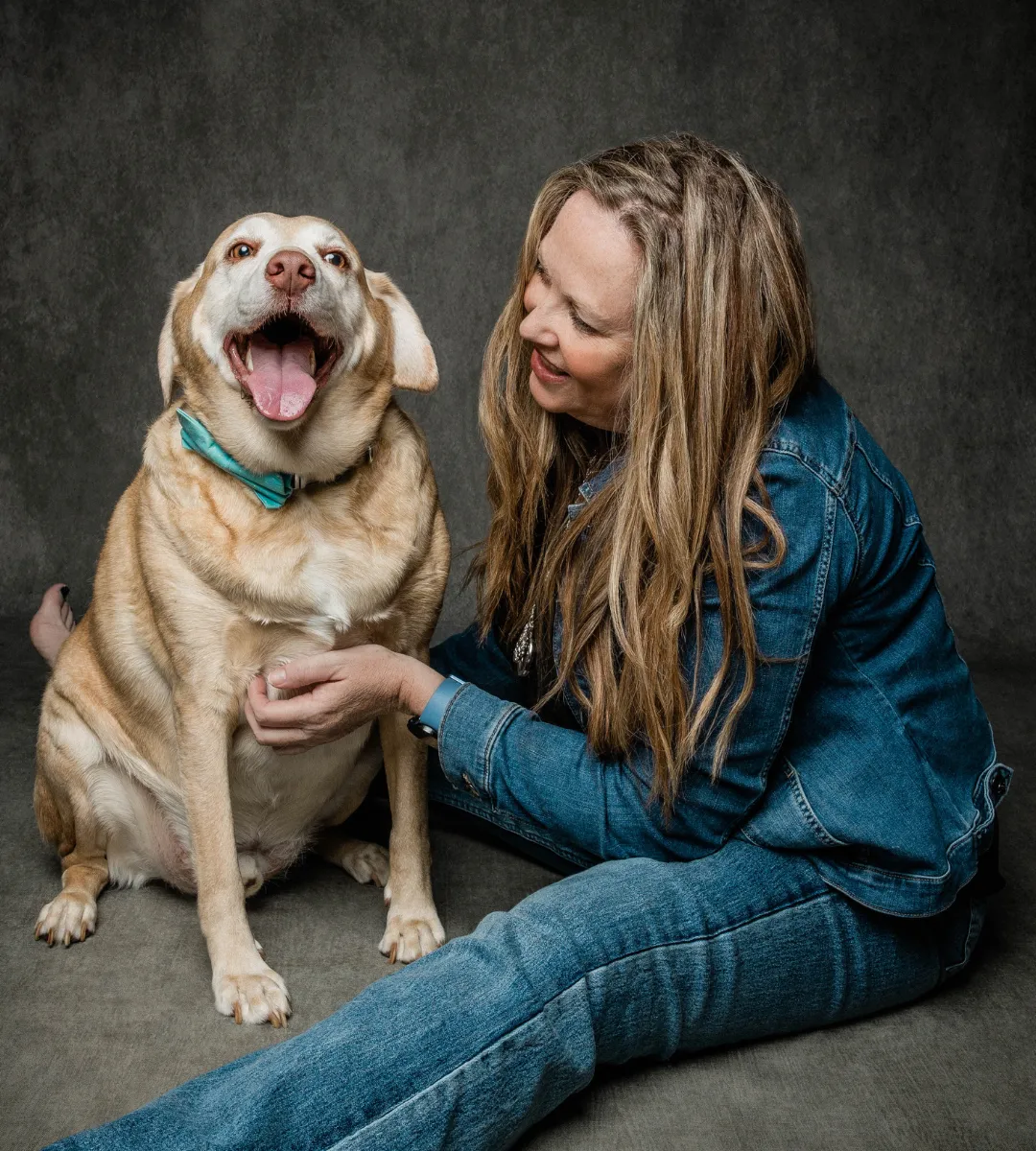
I'm Rusti. A retired U.S. Navy Chief Petty Officer with twenty-four years of service, followed by more than fifteen years in civilian operational leadership. I built the Tactical Mindfulness & Resilience Framework because I was looking for the work I am now teaching, and it did not exist.
For most of my career, I was the person other people leaned on. Steady when it counted. The one who handled it. And like a lot of people in those rooms, I carried things home that I never figured out how to put down. I tried to find help. I did not feel heard.
So I figured it out. I built what I needed, in conditions I knew, refined down to only the pieces that held up when it actually counted.
TMR is what I needed and did not have. I built it. I use it. Departments are adopting it. Now I teach it.
Retired
U.S. Navy Chief
Field-Built
In the Environment
Adopted
By Law Enforcement
The Mission
A Reflected Path exists for the people everyone else leans on, who have never had anywhere to lean. Veterans. First responders. Law enforcement. The people in command. The ones who carry the weight quietly and were never trained to put it down.
Recovery is a skill. We train it.
Not ready for the training yet? Start here.
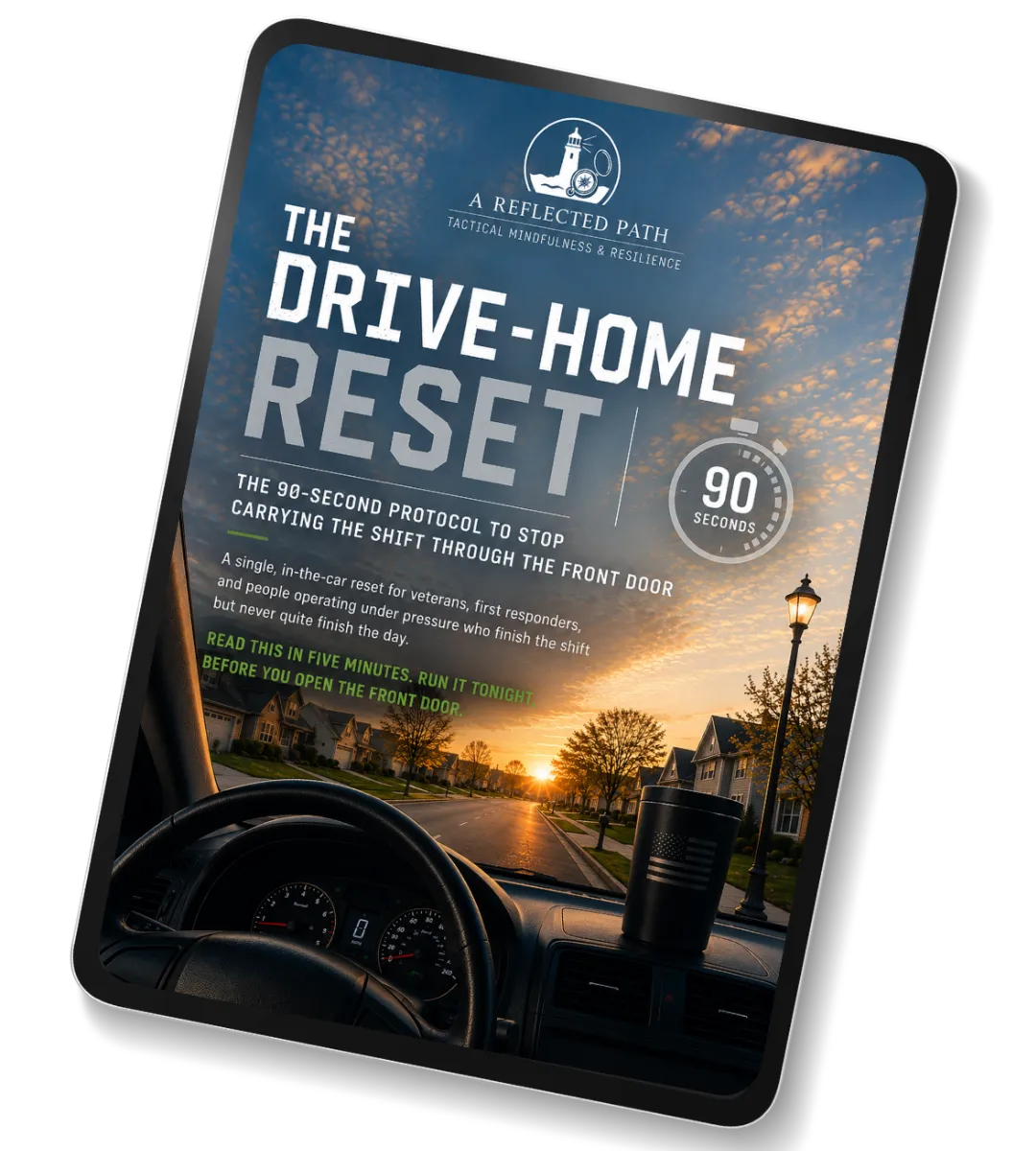
The 90-Second
Drive-Home Reset
This free Drive-Home Reset Protocol gives you a 90-second, in-the-car reset to close out the shift on purpose - so you arrive home present, not forty minutes behind.
A 90-second, in-the-car protocol you can run before you pull into the driveway
Closes out the shift on purpose - so you arrive home present, not forty minutes behind
Drawn from the TMR Framework already being adopted by law enforcement
Delivered to your inbox as a printable guide. No spam.
The Bold Promise
Discover how to stop carrying the day home - without therapy, another app, or pushing through for another 20 years.
"The framework is real. The tools are field-tested. The training you are about to watch shows you exactly how it works and why it holds up - the same framework departments are already investing in. Watch it. Decide from there. That is the contract on this page - no hard sell, no bait, no pressure. Just the training."
The next step is small.
Watch the free training. See exactly how the framework works, what it installs, and why it holds up in real conditions. No hard sell. No opt-in gimmick. Just the training.
Free · Direct · No pressure
Subscribe to Newsletter
For weekly tips, advice & updates...
Info
Connect with me
Connect with me on social media, where I share photography, reflections, and moments from along the way.



Copyright 2026. A Reflected Path. All rights reserved.
Proudly Powered by CoachMatic.app